

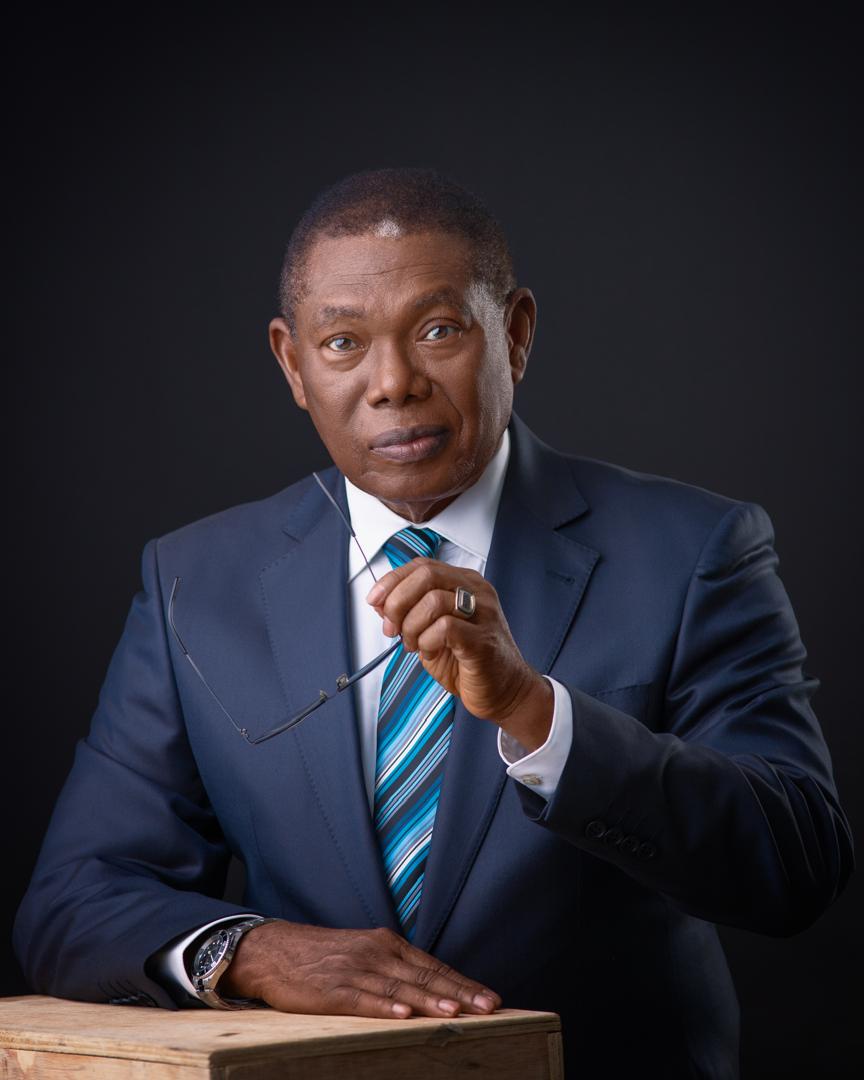
By Chief Chuku Wachuku, (Urichindere Ndi Ngwa)
Addressing the Unnecessary Distortions of the History of Ndi Ngwa — “TO WHAT PURPOSE???”
It has become necessary to address some unnecessary distortions and misconceptions about the history of Ndi Ngwa.
Again, There Is a Need to Set the Records Straight
The history of a people is not something to be rewritten to satisfy contemporary interests, personal ambitions, or sectional narratives.
History is both oral and written.
Indeed, particularly in the history of African societies, oral tradition is an indispensable historical source. The testimony of people who participated in events—or heard directly from those who did—is valuable primary evidence. Later writers, whether professional historians or not, collect, interpret, and put such accounts into writing. In time, those accounts become part of the documentary record.
Colonial records are also valuable historical sources, but they must be understood within the context in which they were created. Much of the history of African societies had already existed for generations before colonial administrators arrived and began recording what they observed—or what was reported to them.
Therefore, the serious student of history must:
- compare sources;
- examine oral traditions;
- interrogate written records;
- consider the circumstances in which records were produced; and
- distinguish historical evidence from later interpretation.
That is how history is preserved—not reinvented.
History is what credible evidence and traditions allow us to establish—not what suits our personal perspectives or ambitions.
The Scholarship
Among the scholars who have contributed significantly to the documentation of Ngwa history is Professor John N. Oriji.
His work is particularly significant because of the extent to which he drew upon oral interviews, historical inquiry, and documentary research in reconstructing the history of the Ngwa people. I had the personal privilege of accompanying Professor Oriji on some of his interview and research engagements, and therefore had some direct exposure to the process through which oral traditions were gathered and examined.
His work provides a useful reminder that the history of Ngwa cannot be understood simply by looking at colonial administrative records or later interpretations of them.
Earlier works remain important historical sources, but they must be read within their own historical context and methodology. Where later scholarship has expanded the evidence base through oral interviews and additional research, those materials deserve to be examined carefully rather than dismissed simply because they may challenge older narratives.
The task of the historian is not to defend an inherited position.
The task is to pursue the evidence.
The Ngwa Migration
The broad tradition of Ngwa migration traces the ancestry of Ndi Ngwa to the Umunoha/Owerri axis, followed by movement southward across the Imo River into what became Ngwaland.
One of the most enduring oral traditions concerns the circumstances surrounding that migration.
The tradition speaks of people preparing yam for a journey. Some boiled their yam, while others roasted theirs. Those who finished first proceeded rapidly and crossed the river before the water level rose, while those who were delayed remained behind.
The expression “Ngwa-ngwa,” traditionally understood as meaning to move quickly or hastily, is associated with those who crossed rapidly.
Those who remained behind are traditionally associated with Ohuhu.
This should be understood as oral tradition, rather than presented as a literal documentary account of every detail. Its historical significance lies in the tradition it preserves concerning migration, separation, and settlement.
Within the broader Ngwa genealogical tradition, three principal ancestral figures are commonly identified:
- Ukwu / Ngwa Ukwu
- Nwoha
- Avosi
But the wider tradition does not end there.
The Eight Founding Lines
The broader Ngwa tradition identifies eight major founding ancestral lines, commonly associated with:
- Ukwu / Ngwa Ukwu
- Nwoha
- Avosi
- Ntigha
- Nsulu
- Ovuokwu
- Ovungwu
- Mbutu
These should more appropriately be described as the Eight Founding Ancestors or Eight Founding Lines, rather than eight biological brothers.
Traditional genealogies distinguish between the relationships among them. Ukwu, Nwoha, and Avosi are remembered in one tradition as brothers; Ntigha and Nsulu are associated with another fraternal line; Ovuokwu and Ovungwu with another; while Mbutu is traditionally remembered as descending from Nwoha.
This distinction is important.
It does not weaken the concept of the Eight.
Rather, it makes the genealogy more historically responsible.
What matters is that the broader Ngwa tradition recognises multiple ancestral lines contributing to the formation and expansion of Ngwa Nation.
Ngwa Was Not Founded by One Line
This is where some contemporary interpretations require correction.
To acknowledge the traditional seniority of one ancestral line is not to erase the historical existence and contribution of the others.
Ngwa Nation was not the product of one lineage alone.
It developed through the movement, settlement, expansion, and interrelationship of multiple ancestral lines and communities.
From the older settlements and ancestral centres—including Okpuala Ngwa—communities expanded and established themselves across a wide geographical area.
The result was not one village.
It was a nation of interconnected communities.
Seniority Is Not Ownership
This distinction is fundamental.
Seniority is not ownership.
An ancestral line may be regarded in traditional genealogy as senior.
That does not make that line “more Ngwa” than the others.
Genealogical seniority is one matter.
Collective identity is another.

To confuse the two is to transform genealogy into hierarchy and hierarchy into exclusion.
The fact that one ancestral line may occupy a senior position in a particular traditional account cannot reasonably mean that the history, identity, or heritage of Ngwa Nation belongs exclusively to that line.
The Eight are part of the story.
The communities that emerged from them are part of the story.
The descendants of those communities are part of the story.
And together they constitute Ndi Ngwa.
A Historical Illustration
Consider the biblical example of David.
David was the youngest of Jesse’s sons, yet he was chosen and anointed by Samuel to become king of Israel. His position as the youngest did not prevent him from assuming leadership over those who were senior to him in age.
The lesson is not that age or seniority is irrelevant. Rather, it illustrates an important distinction:
Seniority may establish precedence in genealogy; it does not, by itself, establish permanent leadership.
Leadership may also be influenced by other considerations—character, demonstrated capacity, pedigree, circumstances, and the mandate or recognition of the people.
Thus, even where seniority is acknowledged and respected, it should not automatically be converted into a permanent claim to leadership or superiority.
Seniority is one historical fact. Leadership is another.
And neither should be confused with the ownership of a people’s collective identity.
History Is Not Personal Property
There has, in recent times, been a tendency in some quarters to interpret or present history in ways that appear designed to elevate one village, one lineage, or one section above others.
To what purpose???
History should not be used as an instrument of sectional aggrandisement.
Positions do not make people historians.
Titles do not make people historians.
Political influence does not make people historians.
And proximity to traditional authority does not make one’s version of history automatically superior.
A person may occupy the highest traditional, political, or social position and still be wrong about history.
Conversely, a person without a title may possess valuable historical knowledge preserved through generations of oral tradition.
History must therefore be judged by evidence—not by the status of the person telling it.
That is not historical scholarship.
It is historical appropriation.
A Personal Note
I make this observation not merely as a commentator on Ngwa history, but also as a son of the soil.
My late grandfather, Chief Josiah Ndubusi Wachuku, was himself deeply embedded in the traditional history and leadership of Ngwaland. He served as a foremost traditional leader of the Ngwa people in his generation. Our family traditions also preserve ancestral connections reaching into the older Ngwa settlements and lineages.
I mention this only to place the author within the historical community being discussed—not to elevate my own ancestry above that of any other Ngwa family.
My grandfather’s history is part of Ngwa history; it does not make my family the owner of Ngwa history.
That distinction is important to me.
The Homogeneity of Ndi Ngwa
There is perhaps no better evidence of the homogeneity and interconnectedness of Ndi Ngwa than the very names by which our communities are known across the geographical expanse of Ngwaland.
The homogeneity of the totality of Ngwaness is also reflected in the recurrence and extension of ancestral and community names across the wider Ngwa territory—particularly throughout the old Obioma Ngwa area and adjoining Ngwa communities.
Names such as Aba, Agburuke, Ntigha-Uzo, Ahiaba, Osusu, Abayi, Amapu, Amuzu, Mbutu, Ohanze, Nsulu, Ovungwu, Ovuokwu, Uratta, Okpuala, Umuohia, and others are found, in various forms and contexts, across Obingwa, Osisioma Ngwa, Ugwunagbo, Isiala Ngwa North, and Isiala Ngwa South.
Their recurrence is not a minor geographical coincidence. It reflects the movement, settlement, interrelationship, and expansion of ancestral communities within a wider, shared Ngwa historical space.
The very names embedded in our communities therefore tell a story of interconnectedness rather than isolation; of a common heritage rather than separate “degrees” of Ngwaness.
That is why the history of Ngwa cannot reasonably be reduced to the history of one village, one lineage, or one ancestral branch.
The historical picture is much broader:
Eight ancestral lines.
Many communities.
One people.
That is the essence of Ngwa homogeneity.
Ngwa history belongs to all Ndi Ngwa.
No single village owns it.
No single lineage owns it.
No individual owns it.
It is the collective inheritance of the Ngwa people.
And perhaps this is the most important point of all:
We do not diminish any Ngwa ancestor by acknowledging the others.
We do not diminish Ngwa Ukwu by recognising Nwoha.
We do not diminish Nwoha by recognising Avosi.
We do not diminish Avosi by recognising Ntigha, Nsulu, Ovuokwu, Ovungwu, or Mbutu.
On the contrary, we strengthen Ngwa history by acknowledging the fullness of its ancestry.
The greatness of Ngwa Nation is not that one ancestral line stands above all others.
It is that many ancestral lines, through generations of movement, settlement, and interrelationship, became one people.
That is the history worth preserving.
That is the history worth teaching.
And that is the history that should unite Ndi Ngwa.
TO WHAT PURPOSE, THEN, SHOULD WE DISTORT IT?
Publish by Ngwafacts Media Services @2026


More Stories
NWOSU UCHENNA HILARY MAKES FRONT PAGE NEWS
ABIA APC GOVERNORSHIP CANDIDATE, DR. ERIC OPAH, THE TIGER KILLER
ERIC OPAH FOUNDATION: AN IDEA WHOSE TIME HAS COME